
Start with the print order, not the parcel
Most print shops do not charge courier fees in the same way for every order, because cartons, tubes, board packs and pallet loads all move differently. A business card carton that fits into a small satchel is one thing, while a run of folded brochures or rigid signage needs a larger service and more handling.
That is why courier charges work best when they are linked to the order type first, then to weight, volume and delivery area. A product builder can do some of this work in the background, but the rule still has to be set by the shop. If the checkout only looks at product value and ignores packing size, the final number can land badly for both sides.
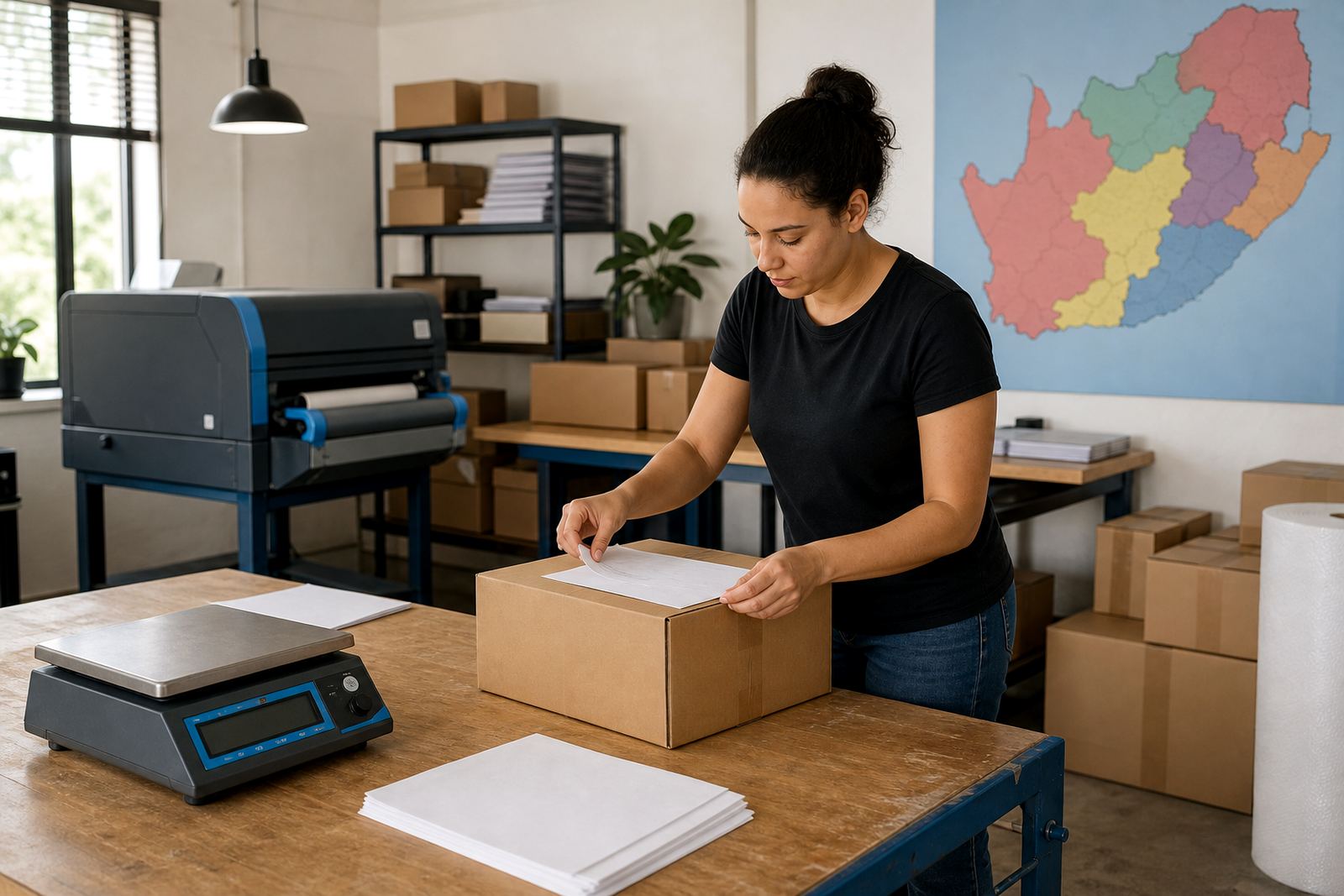
For South African print shops, the practical question is not just “what does the courier cost?” It is also “how much packaging, risk and travel time sits behind this item?” That answer changes between a small envelope run and a set of boxed presentation folders going to a client in another province.
The common ways shops structure delivery fees
There are a few patterns that show up often in online print storefronts, and each one suits a different style of work. Some shops keep it flat for local deliveries, while others build a price matrix that changes by weight bands or by zone.
- Flat fee per order for one metro area, useful when most deliveries stay inside the same city.
- Zone-based charging for local, regional and national delivery, where the cart calculates by destination.
- Weight or volume bands, which help when lightweight flyers and bulky display items share the same store.
- Free delivery above a spend threshold, often used for repeat clients or larger baskets.
- Collection only for selected items, which keeps oversized or fragile work out of standard courier rules.
Each approach has trade-offs. Flat fees are easy to understand, but they can undercharge heavy orders and overcharge light ones. Zone rules feel fairer, though they need accurate address data and a clear list of delivery towns. A good setup keeps the customer informed before payment, not after the order has been placed.
What changes the courier line on a print job
Print orders carry a few extra variables that general e-commerce shops do not always face. Artwork approval can delay packing, but it also affects whether the job is ready to leave in one parcel or split into two. Laminated work, rigid board, foiled pieces and hand-finished items need more care and often more protective packing.
These details matter when the checkout or internal admin has to choose a courier service. A boxed calendar pack going to Pretoria may move quite differently from a stack of posters headed to a Durban office park. In coastal areas like Durban and Cape Town, packaging also has to stand up to damp air and rough handling, so the delivery fee should reflect the packing method used.
A practical rule is to identify which products can travel in a standard parcel, which need oversized handling, and which should be delivered on a quoted basis only. That keeps the courier charge tied to the real job, not to a guess at the last minute.
Small details can shift the fee as well, such as stair access, limited loading space or a delivery address inside a business district with strict receiving hours. The shop does not need a long explanation on every cart, but it does need one clean rule set that staff can apply the same way every time.
How B2B clients usually want delivery handled
Corporate buyers often want a different structure from walk-in retail customers. They may order more often, ship to more than one branch, and need courier charges shown in a way that matches their internal approval process. A B2B portal can carry separate delivery rules for each account, which is useful when a company in Johannesburg wants site delivery while another team in Bloemfontein prefers a central receiving address.
For these clients, the delivery charge can sit as one of the following:
- Pre-set per account, based on agreed zones and delivery rules.
- Linked to purchase value, where larger orders receive adjusted shipping bands.
- Quoted manually for bulky or mixed-product consignments.
- Split by branch, so each delivery point follows its own rule.
That sort of setup reduces confusion later, especially when several departments place orders from the same portal. It also helps the print shop keep a record of which courier method was used and which address formed part of the invoice trail.
A Durbanville example that keeps the numbers honest
Take a Durbanville print shop sending same-day local work into Cape Town, Paarl and Stellenbosch while also shipping national orders from the same storefront. Business cards and folded leaflets may move under a low flat fee inside the local metro, while rigid display boards or boxed kits may need a higher delivery band.
In practice, the shop can set one rule for local parcels, another for Western Cape towns beyond the metro edge, and a separate national rule for Johannesburg, Pretoria, Durban and Bloemfontein. The customer sees the relevant charge at checkout, and staff do not need to rebuild the price every time a postcode changes.
This works best when the product catalogue is built with the packing reality in mind. A poster tube is not the same as a carton of flyers, and a courier matrix should reflect that. If the rules are too loose, the shop absorbs extra cost. If they are too strict, customers abandon the cart or ask for manual quotes on work that should have been straightforward.
Keep the charge visible before payment
The clearest courier setup is the one the customer can understand without guessing. The delivery line should appear before checkout closes, and it should be tied to the actual order. That means the store needs honest shipping notes, sensible address fields and product rules that tell the system what can travel together.
Useful checks for a print shop include:
- Does the product builder calculate courier before payment?
- Are metro and national zones separated clearly?
- Do heavy or bulky items trigger a different rule?
- Can staff override a charge when a mixed order needs special handling?
- Is the delivery method recorded for admin and proofing trails?
When those pieces are in place, courier charges stop being a guessing exercise. They become part of the order flow, which is exactly where they belong. For a shop running online print sales across South Africa, that structure saves time, protects margin and makes the checkout feel settled rather than uncertain.