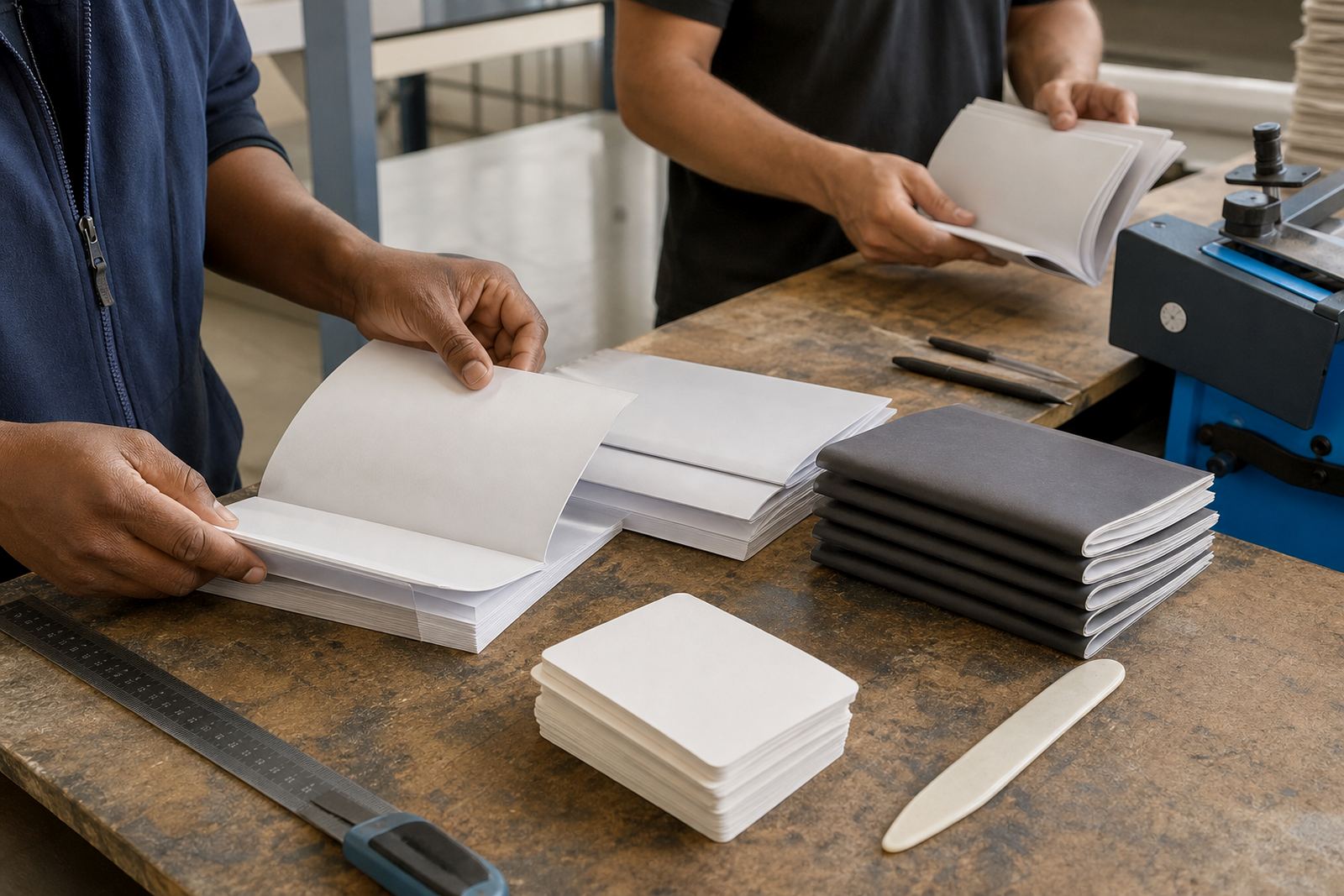

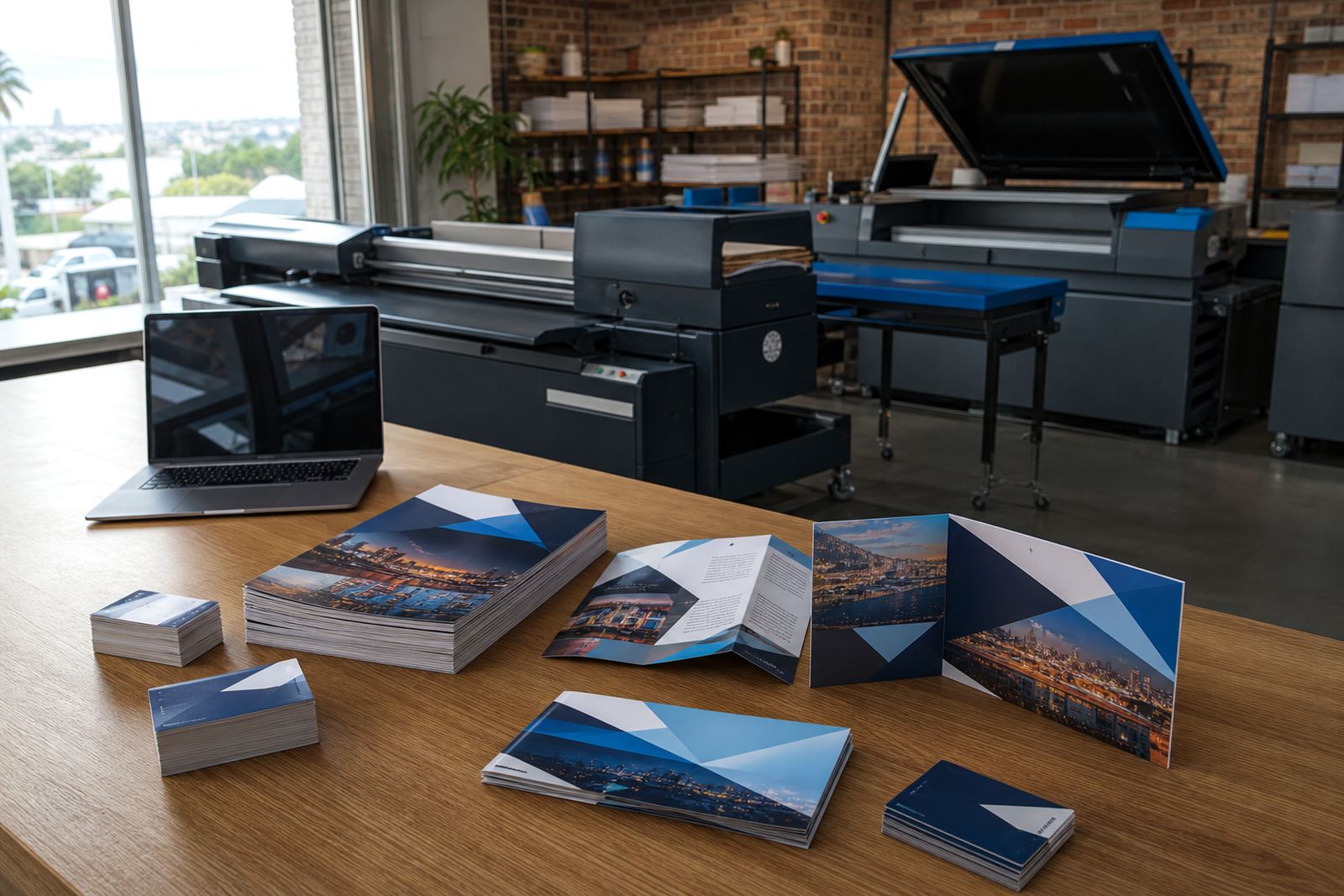
Start with the products that follow the same pattern
Some print jobs are ready for online pricing because the choices stay predictable. A customer picks size, quantity, paper or board, finish, and maybe a single artwork option. That is the sort of product where a price matrix can do the heavy lifting without constant manual checking.
The easiest products are usually standard flyers, business cards, posters, folded leaflets, pull-up banners, stickers, presentation folders and basic labels. These items tend to have fixed production paths, known material sizes and clear breakpoints in quantity. When the product is already sold that way across the shop counter, it often translates neatly into a storefront.
- Fixed sizes with limited variation
- Reorders from the same specification
- One or two artwork placements only
- Clear quantity breaks and finishing options
Where online pricing works best on a print menu
Online pricing suits products that do not need a long conversation before a quote makes sense. If the shop already prices them from a rate card, a spreadsheet, or a familiar rule set, that is a good sign. The more often the same inputs lead to the same answer, the easier the move.
Products with awkward one-off variables are harder to automate. Think of custom die-cut work, unusual board builds, mixed substrate jobs, or projects where the production route shifts each time. Those can still live in the portal later, but they usually need a stronger workflow first.
A Durbanville print shop serving Cape Town firms might begin with business cards, short-run flyers and branded stickers. Those are easy to quote online because the client usually needs a standard size, a known finish and a clear turnaround path. The shop can leave complex packaging or wide-format installations for manual handling until the rules are settled.
Price matrices need clean product logic
A price matrix works best when the product structure is tidy. Each row or rule should answer a single question: what does this size, quantity, paper choice and finish cost? When the logic is messy, the storefront becomes hard to maintain and staff still end up checking every order by hand.
The strongest candidates are products with a limited number of variables. A good matrix can usually cope with size bands, paper weights, single or double sided print, and a small list of finishes. Add too many exception rules and the pricing table starts to wobble.
- Use one product family per pricing rule
- Separate standard items from custom quotes
- Keep finishes consistent across the range
- Build clear quantity steps, not guesswork
Artwork rules matter as much as price
Standard products only stay standard if the artwork path is controlled. The online flow should tell the client what file type to upload, what bleed to include, which safe area matters and where text can go. If the file is wrong, the order slows down and the quotation loses its value.
Artwork preflight can catch common problems before production gets involved. That includes low resolution images, missing bleeds, wrong page sizes, colour shifts and fonts that are not embedded. For print shops, this is where online pricing starts to save time in a real way, because fewer jobs reach the team in a messy state.
Staff training also matters here. A team that knows how the product template, proofing step and artwork rule set fit together can explain the online path clearly, whether the client is in Pretoria, Stellenbosch or Bloemfontein.
B2B portals suit repeat buyers with stable ranges
Corporate clients are often the best fit for a B2B portal when they buy the same items every month or quarter. The portal can hold approved products, agreed price structures, user roles and ordering limits. That keeps the ordering side organised and cuts the back-and-forth around every new job.
This works especially well for standard items such as stationery packs, internal signage, branded folders, labels and event collateral. The client logs in, selects the approved product and places the order without rebuilding the brief each time. The print shop keeps control of the catalogue and the account still feels tailored.
- Approved products for each department or branch
- Controlled pricing by client or user group
- Order tracking into production
- Cleaner repeat ordering for busy teams
What should stay on manual quote for now
Not every product belongs in online pricing straight away. If the job needs a site visit, a lot of production judgement or a quotation built from several unknowns, manual quoting is still the better path. The online store should support the business, not force every enquiry into the same mould.
Keep manual quoting for custom packaging, unusual substrates, complex finishing stacks, variable data projects with heavy checks and jobs that depend on special fitting. Those jobs can still be organised in the system, but they are safer when a human reviews the brief first. That keeps the storefront honest and the production team out of avoidable trouble.
A useful rule is this: if the product can be quoted from a fixed menu and a repeatable rule set, it can probably move online. If it relies on a long explanation every time, keep it in the quote queue until the workflow is tighter.
A practical first rollout for South African print shops
The smoothest rollout is usually a narrow one. Start with the most standard products, build the templates, test the proofing flow and check the price matrix against the shop’s current method. Only then add the next product family. That sequence keeps the staff involved and helps the portal match how the business already works.
For a Cape Town shop with clients across Johannesburg and Durban, the first live group might be business cards, flyers and posters. Those products are familiar, easy to describe online and simple to track from order to production. Once the team is comfortable, the catalogue can grow into more specific work such as folders, labels and selected B2B items.
The point is not to put every product online at once. The point is to move the standard products first, where pricing can be trusted and the order path stays clear from start to finish.