

When every branch must sell the same brand correctly
Franchise groups usually start with a familiar problem. A branch manager wants to place a quick order, the marketing team wants brand control, and the print room needs a clean job ticket with no guesswork. PrintEngine supports that setup by giving each location a guided storefront with the right products, fields and artwork rules already in place.
For franchise print programmes, the useful part is not only the front end. It is the way a central team can approve templates, lock pricing rules and see which branch ordered what, without chasing paper trails or separate message threads. That matters for menus, point-of-sale sets, staff uniforms, flyers, business cards and launch packs where every outlet must look the same.
In Durban, Cape Town or Pretoria, the order may be entered by a branch admin who knows the local need but not the print specification. The storefront needs to guide them through size, quantity, finish, artwork upload and delivery site, then pass the job into production with the right information attached.
What the franchise ordering set usually needs
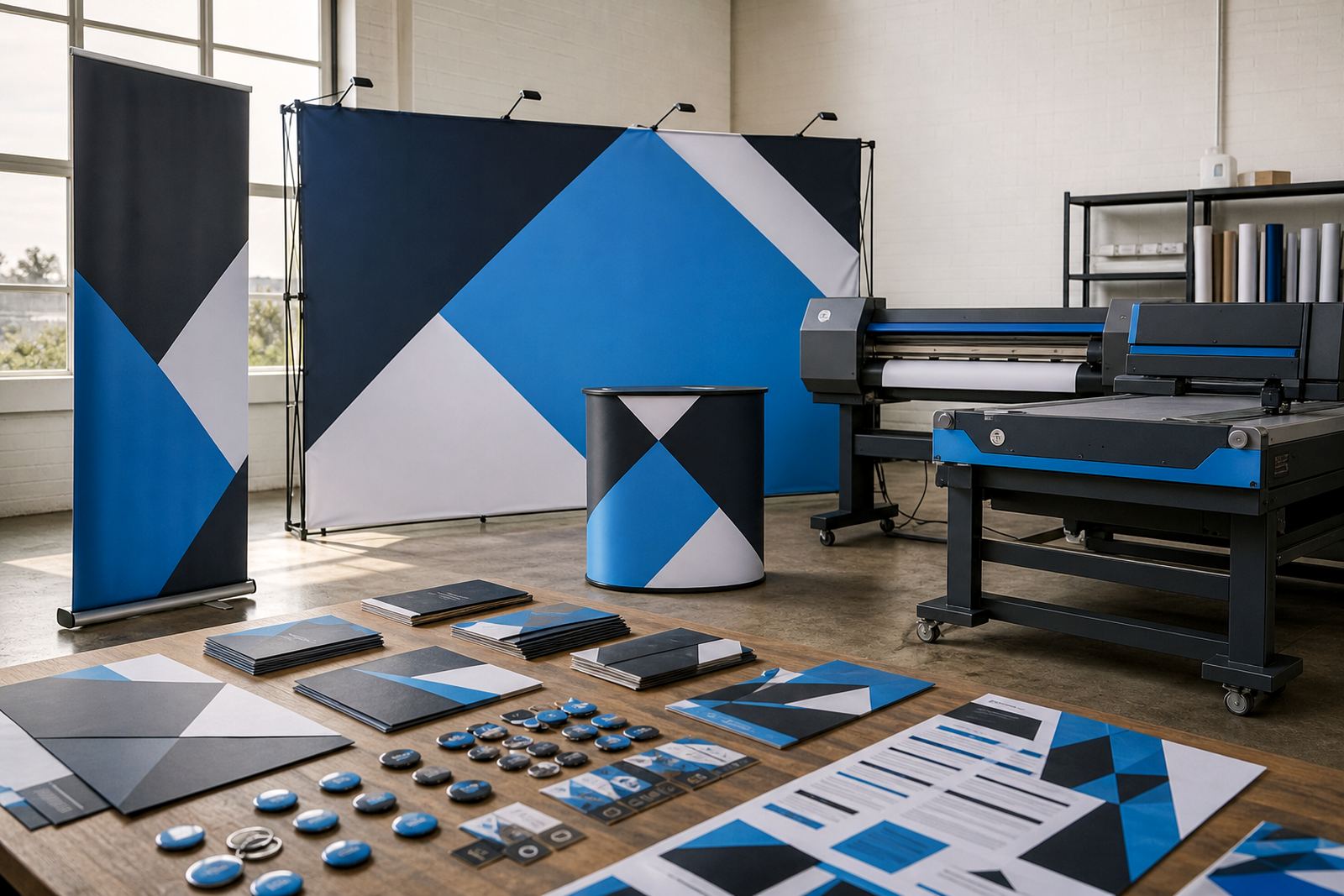
A franchise rollout normally uses a core group of print items repeated across many sites. Those items need product builders, pricing matrices and approval controls rather than a free-form quote page. PrintEngine is suited to that pattern because the catalogue can be arranged around approved items, branch access and central oversight.
- Product builders for standard items, including size, stock, finish and quantity
- Artwork upload with file checks, so low-resolution files and missing bleed can be flagged early
- Proofing workflows for sign-off before the job reaches production
- B2B portals for franchise head office, regional managers and branch users
- Order tracking that shows progress from submission to print, finishing and dispatch
- Payment and courier handling, where the group needs card, invoice or account-based processing
The layout also needs to reflect how franchises really work. Some branches order often, others only when a launch or promotion lands. A good setup allows both without forcing the same buying pattern on every site. It also helps when a group needs one template family for multiple towns, with branch-specific contact details or delivery notes added where needed.
Planning the catalogue before the first rollout
The strongest franchise installs usually begin with a clean product map. If the catalogue is too wide, branches get lost. If it is too narrow, staff go back to manual requests and the system loses value. We normally look at the items that repeat across the group, then group them by use, not by the print room’s internal file names.
That planning stage should cover artwork rules, number of approvers, branch roles and the delivery path. A franchise in Stellenbosch with a few sites needs a different workflow from a national group running offices in Johannesburg, Durban and Bloemfontein. The product set can be the same, but the approval route and delivery notes often differ.
- Define which items are branch ordered and which stay central
- List the required fields for every product, including branch name, site code and delivery point
- Decide which files need preflight checks before proofing
- Set up the pricing logic for standard quantities and special runs
- Choose whether branch users can pay directly or place account orders
For most franchise groups, the setup work is less about flashy features and more about control. A good template build reduces mistakes on recurring items and keeps the ordering experience familiar for staff who only place a few orders a month.
Common mistakes that create avoidable rework
Franchise rollout problems often come from trying to copy an old ordering habit into a new platform. If the old process depended on WhatsApp messages, loose PDFs and multiple approvals by phone, that structure usually turns messy online as well. The software must be shaped around the group’s actual approval route, not the other way round.
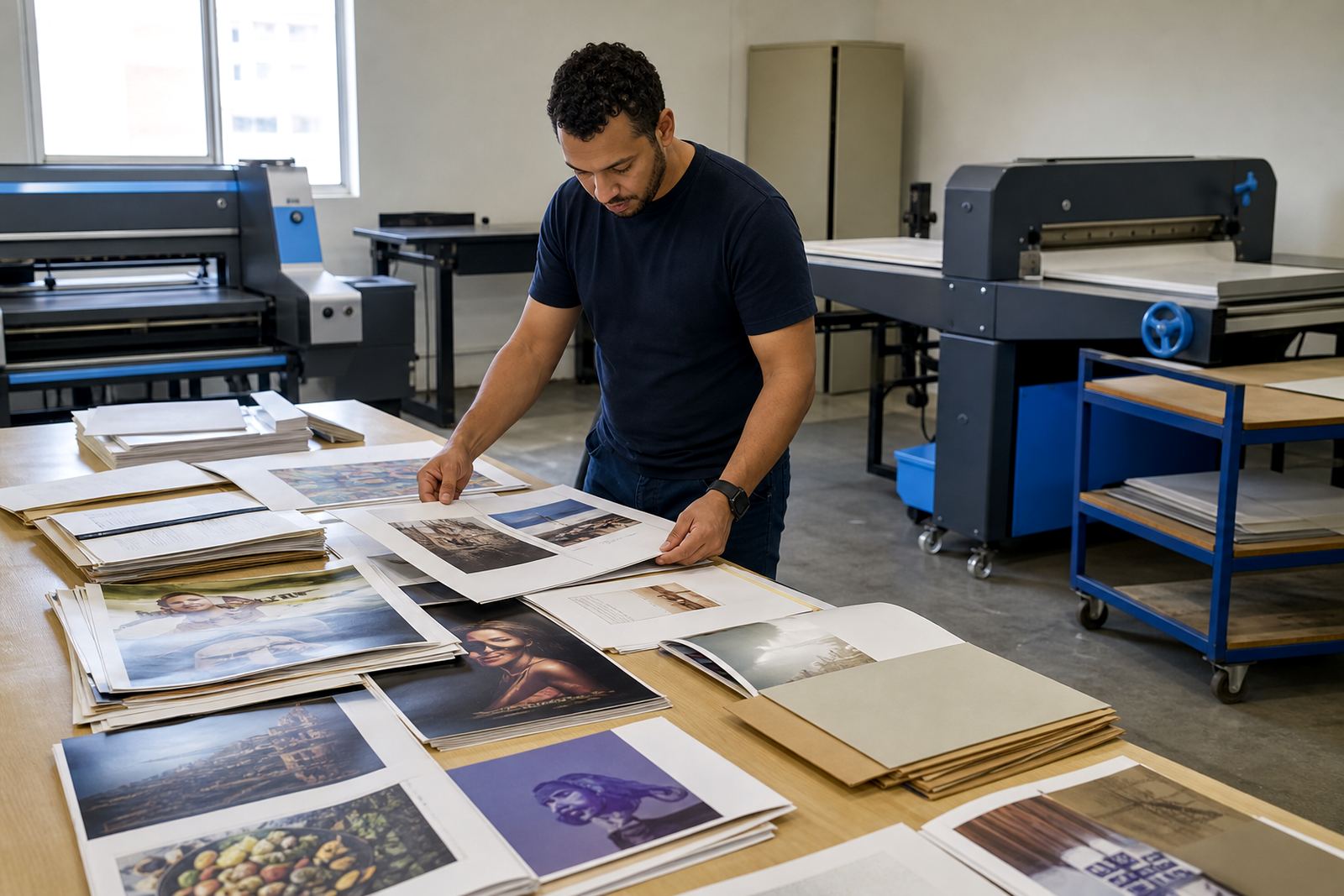
Another mistake is leaving artwork checks too loose. When a branch uploads a logo or menu file without the correct trim, colour or layout margins, the printer has to stop and query the job. That slows production and can create avoidable back-and-forth between the shop floor and the branch admin.
Groups also get permissions wrong. Head office may want full visibility, but local branches should see only their own orders unless they are part of a shared regional team. In a franchise environment, access control is not a nice extra. It is part of what keeps the system useful after launch.
We also see catalogues that are too dependent on one person. If only one staff member knows how the templates, pricing rules and proofing steps were set up, the group becomes stuck when roles change. Training should cover the people who place orders, check proofs and manage catalogue updates.
What the budget usually covers in rand
Budgeting for a franchise print portal usually comes down to the number of products, the amount of template work, the complexity of pricing and how many user roles need training. A small rollout with a tight product list costs less than a multi-branch system with several approval layers and custom delivery logic.
For South African franchise groups, the budget often has a few parts. There is the initial setup for the storefront, the template build for approved items, the pricing matrix work, the proofing and artwork rules, and then the staff training for branch users and administrators. Payment handling, courier logic and order tracking can also shape the final figure, especially when the group wants account billing or branch-level delivery routing.
As a working range, a focused franchise setup may sit from about R35 000 to R85 000 for a smaller programme with a limited catalogue. Larger rollouts with many templates, several user types and broader workflow mapping can move from about R90 000 to R250 000 or more, depending on the amount of data and process work involved.
Ongoing costs depend on support, catalogue growth and how often the group adds new products or branch formats. If a franchise opens new sites in Paarl, Durbanville or elsewhere, the system usually needs more templates, more users or new delivery rules as the network grows.
How we shape the rollout for a franchise group
Our team works from Durbanville, Cape Town and supports franchise groups across South Africa with setup, template build, staff training and workflow review. Pieter van Zyl leads the work, with Ayanda Nortje handling implementation, Johan Kotze on product templates, Naledi Ebrahim on training, Ridwaan Adams on support and Bianca Daniels on client success.
A typical rollout starts with the product list and the approval chain. From there, the template set is built around the catalogue the franchise actually uses, not a broad wish list. Once the pricing rules and artwork checks are in place, the B2B portal and order tracking can be matched to the group’s internal process.
That approach suits franchise print programmes because the same order type can be used by a branch in Cape Town, a regional office in Pretoria or a store network in Bloemfontein. The system should hold the structure steady while still allowing location details, delivery notes and account controls to vary where needed.
If your group is moving away from manual ordering, our contact form is where to send the first outline of the catalogue, branch structure and approval flow.