
Selling window graphics as a measured product
Window graphics are often quoted by square metre, then shaped by film type, finish, print side and fitting method. A solid product setup lets your team sell small shopfront decals, full glass coverage and cut lettering from the same catalogue line without rewriting every quote.
For this product, the builder usually needs width and height in millimetres, a choice of print finish, and a clear note on whether the job is supply only or supply with installation. A good setup also carries remarks for internal glass, external glass and fixed glazing, because the artwork and fitting details are not identical.
- Typical size input: 500 mm to 3000 mm wide, 500 mm to 2500 mm high
- Pricing unit: square metre, with minimum charge rules if needed
- Common variants: frosted look, full colour print, cut vinyl, perforated film
- Use case notes: shopfront glass, office partitions, reception windows, street-facing panes
Artwork rules that save a messy reprint
Window graphics live or die on artwork prep. Text needs to read the right way when viewed from inside or outside, and any cut line, white ink area or clear opening has to be defined before production starts. That is where artwork rules and preflight checks earn their place.
When a customer uploads artwork, the system should prompt for file type, colour mode and version notes, then flag missing outlines, low resolution images or unsupported dimensions. It also helps to capture whether the artwork is supplied as a single panel, tiled panels or separate sections for multiple panes.
- Accepted artwork notes: vector logo, print-ready PDF, layered artwork or a flat image for layout only
- Check items: bleed, safe margins, line thickness and reversed text
- Optional production notes: face-mount, inside-glass application, panel numbering, window map
Where window graphics fit in real jobs
This product suits retail windows, office partitions, restaurant glazing, estate agency fronts, medical rooms and event venues. In Durban or Cape Town, the same film can behave differently on sun-exposed glass than it does in a shaded passage, so the product notes should capture location, wind exposure and whether the pane is flat or slightly curved.
Some jobs are pure decoration. Others need privacy, glare reduction or directional messaging near street level. If the graphics are part of a wider signage package, the order should point clearly to which panes carry branding, which panes stay clear and which panels need sequential numbering for fitting.
- Suitable surfaces: clean glass, laminated glazing, internal partitions and framed windows
- Common job types: promotional windows, privacy screens, seasonal displays, office frost effects
- Location notes: interior, exterior, street-facing, upper floor, sheltered entrance
Fitment notes that belong on the order
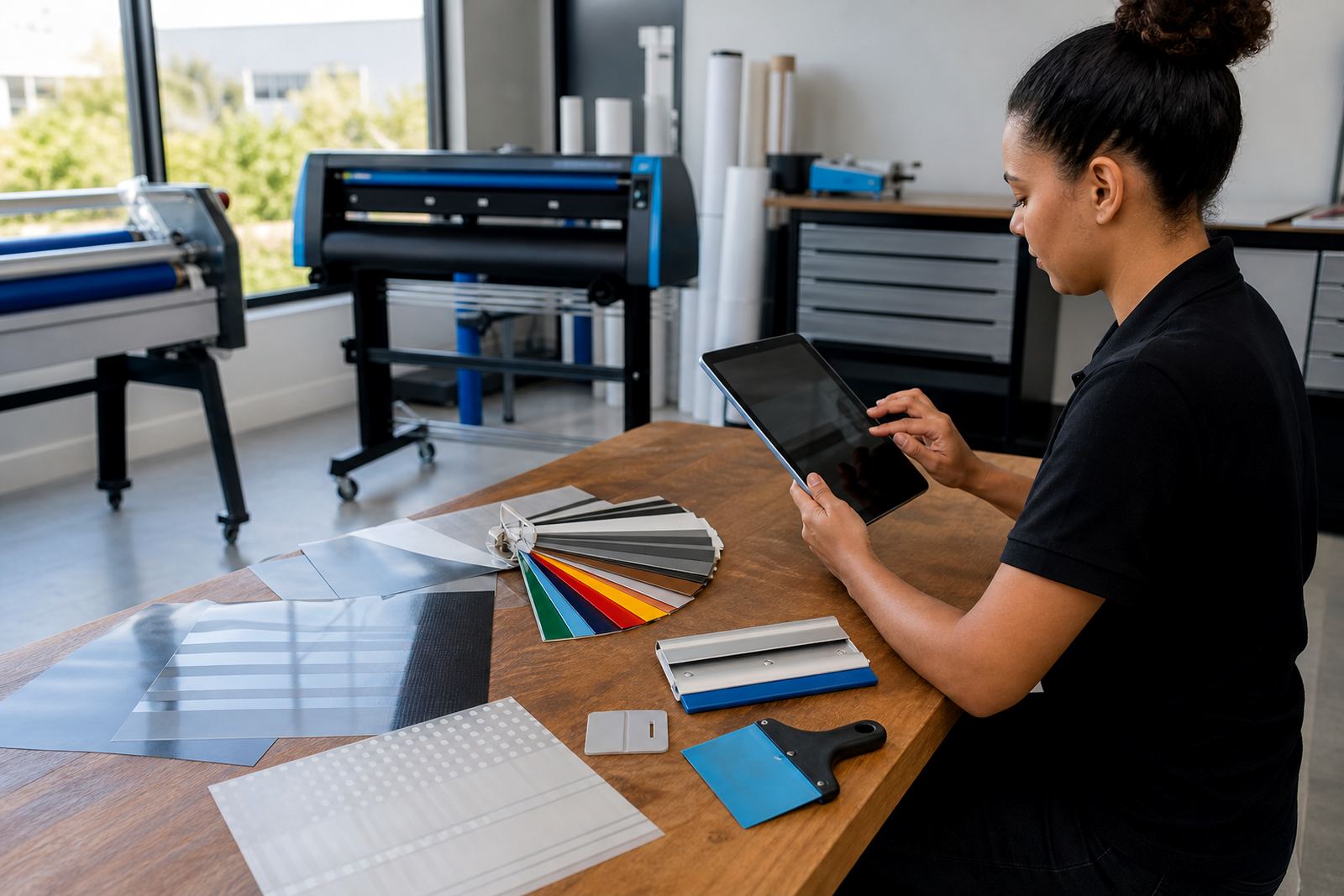
Window graphics can be supply-only, or they can include installation by a fitter who works on site with ladders, squeegees, knives and a clean edge finish. For larger panes, the installer may need access times, parking notes and a clear plan for occupied offices or trading hours.
Fitting instructions should tell the team whether the glass is freshly cleaned, whether existing decals must be removed, and whether the installation needs one installer or two. If the job includes perforated film, frosted film or layered print, the fitting sequence matters and should be visible before the job reaches production.
- Installation notes: supply only, site fit, removal of old vinyl, staggered fitting, after-hours access
- Access notes: ground floor, upper level, lift access, scaffold or ladder use
- Surface notes: dry glass, laminated pane, film over film, sealed edge requirement
Care, cleaning and wear on busy glass
Most window graphics are cleaned with a soft cloth, mild soapy water and no abrasive pad. Printed films on public-facing windows take fingerprints, dust and sun exposure, so the care notes should match the film type rather than use one catch-all instruction for every job.
For shorter life promotional graphics, the order can carry a removal note after a campaign ends. For longer term installations, it helps to record whether the film is expected to stay up through summer heat, winter damp or sea air, especially for coastal sites where the glass line gets salt and grime faster than inland premises.
- Care notes: wipe gently, avoid scouring pads, keep sharp blades away from the printed face
- Durability notes: temporary campaign, seasonal use, long term display
- Removal notes: peel care, adhesive clean-up, replacement panel reference
What the product builder should ask before pricing
A useful window graphics setup asks the right order questions before the quote is locked in. The shop team needs the pane sizes, the number of panels, whether the print is single sided or visible from both sides, and whether installation is part of the job.
Price matrices can then apply square metre logic, minimum charges, fitting fees and optional extras such as artwork checks or urgent production handling. Where a customer manages several branches, the B2B portal should store repeat sizes, delivery locations and previous artwork versions so the same window set can be ordered without re-entering every detail.
- Details to confirm: exact measurements, quantity of panes, finish type, print side and fitting choice
- Pricing inputs: material grade, coverage area, installation line, removal of old graphics, delivery zone
- Account features: branch-level ordering, saved templates, approval flow, order history
Specs that help the shop hand off cleanly
Window graphics need a clear spec sheet because the order moves through sales, preflight, print and fitting. PrintEngine supports the kind of setup that keeps those steps visible, from the first product selection to order tracking in production.
With the right template, the team can separate frosted film from full colour print, group similar pane sizes, and keep payment and delivery details attached to the right job. That helps when a print shop in Bloemfontein handles a chain order for multiple sites, or when a Durban branch needs different fitting dates to the main office.
- Spec field: material type, such as clear adhesive film, frosted vinyl, perforated film or cut lettering
- Spec field: size in millimetres, with square metre calculation from width and height
- Spec field: finish, such as matte, gloss, frosted or opaque coverage
- Spec field: artwork orientation, inside read, outside read or mirrored setup
- Spec field: installation option, supply only or fitted on site
- Spec field: production note, single panel, tiled panel set or multi-pane layout
Key facts
| Product | Window Graphics storefront setup |
|---|---|
| Pricing unit | Square metre with material and fitting notes |
| Artwork handling | Upload, preflight, proofing and print-side checks |
| Ordering options | Supply only or supply with installation |
| Portal use | B2B reorders, branch access and saved templates |
| Base area | Durbanville, Cape Town with South African rollout |